

Everyone knows someone whose recommendations carry disproportionate weight: the friend who always knows the best restaurants and hotels, the colleague you text when trying to decide what to wear to a wedding, the person in the group chat whose product links everyone actually uses. The same dynamic exists online, where creators and tastemakers shape how people shop, with followers saving posts and screenshots to recreate a look.
In both cases, the recommendation drives the purchase. Influence often turns into commerce, but not always into income for the people behind it. While professional creators and tastemakers have built businesses around this behaviour, many others whose taste shapes those decisions have never had a clear way to capture that value. ShopMy has built the infrastructure to change that.
Before the rise of affiliate marketing, recommendations shaped purchases through word of mouth, editorial endorsements, celebrity endorsements and brand partnerships, but they were difficult to track and often not directly tied to transactions. Affiliate marketing introduced the first scalable system for formalising recommendation-driven commerce online. Platforms such as Rakuten and LTK (formerly rewardStyle and LIKEtoKNOW.it), which emerged in the late 2000s and early 2010s, introduced mechanisms through which creators, publishers and media platforms could earn commission from the products they recommended, while cashback and rewards platforms allowed consumers to receive a share of that commission. Together, these models offered brands a more performance-driven alternative to traditional advertising. Fashion bloggers, in particular, were early adopters, embedding affiliate links within outfit posts and “shop the look” edits and turning editorial content into a direct commercial channel (1). Over time, this model scaled significantly, with platforms like LTK becoming deeply embedded in the influencer economy and driving substantial volumes of e-commerce. The broader affiliate ecosystem has also expanded to include a range of smaller creator tools, including platforms such as Split.

At its core, affiliate marketing introduced a simple but powerful shift: recommendations could be tracked, and influence could be tied directly to transaction. For the first time, the act of sharing a product had a measurable commercial outcome.
The model deployed by platforms such as LTK was built around affiliate links. While creators curated the products and styles they recommended, the shopping experience relied on links that redirected users away from the original content and into external retail environments. Early affiliate marketing lived in blog posts, editorial articles and, later, Instagram bios and posts. Even as social platforms evolved to allow more seamless linking, including Instagram’s rollout of link stickers in Stories to all users in 2021, the system remained fragmented. Consumers struggled to return to past recommendations once content disappeared, while creators had to track performance across multiple platforms, brands and affiliate networks (2).
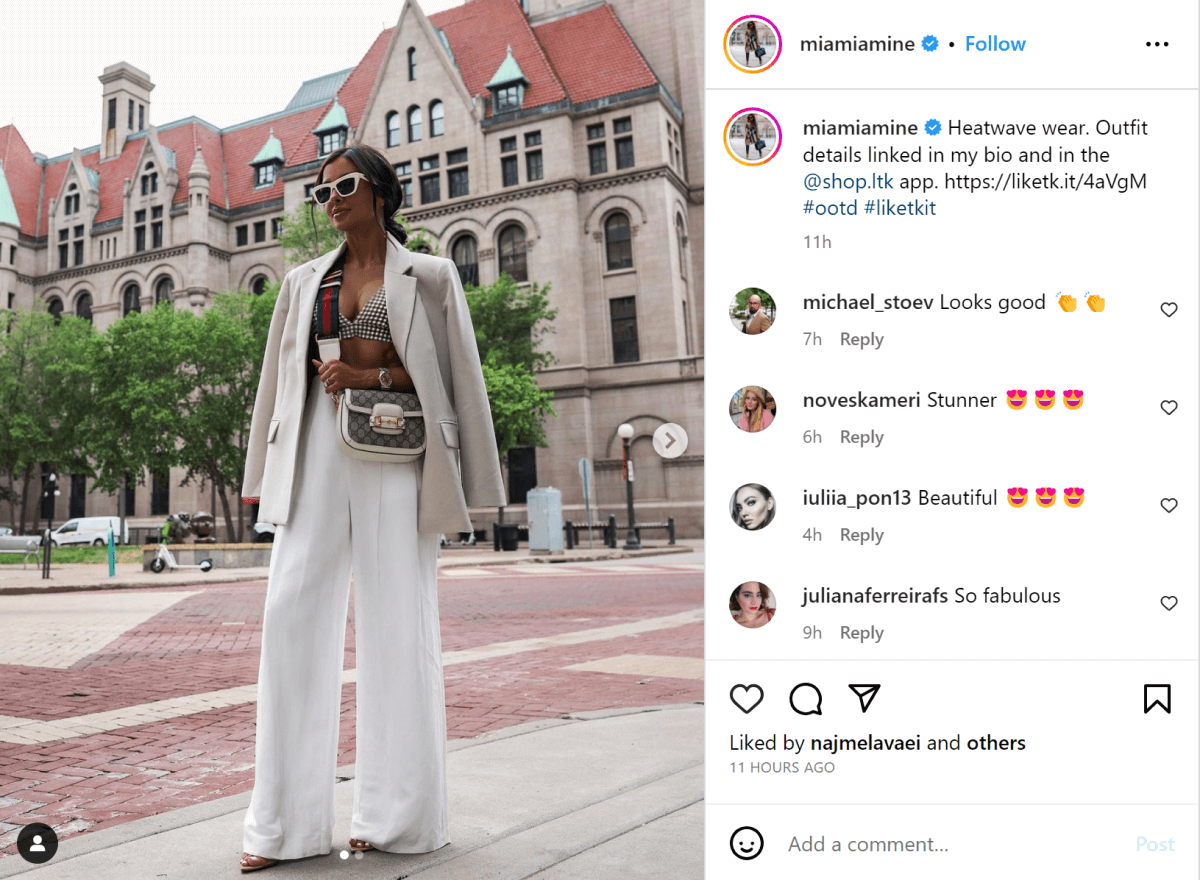
(Image Reference: Trend Hero, “A Brands Guide to Influencer Affiliate Marketing ”, 2023)
As a result, recommendations were dispersed across posts and platforms, making them difficult to organise and almost impossible to compound over time. Creators could monetise moments, but not build systems. These affiliate tools made it possible to track which recommendations drove purchases, but they did not provide an easy way to organise or scale those recommendations in a format that could showcase a tastemaker’s point of view over time.
This gap created the conditions for a new generation of platforms, built not just to monetise recommendations, but to structure them into something more persistent, navigable and trusted over time.
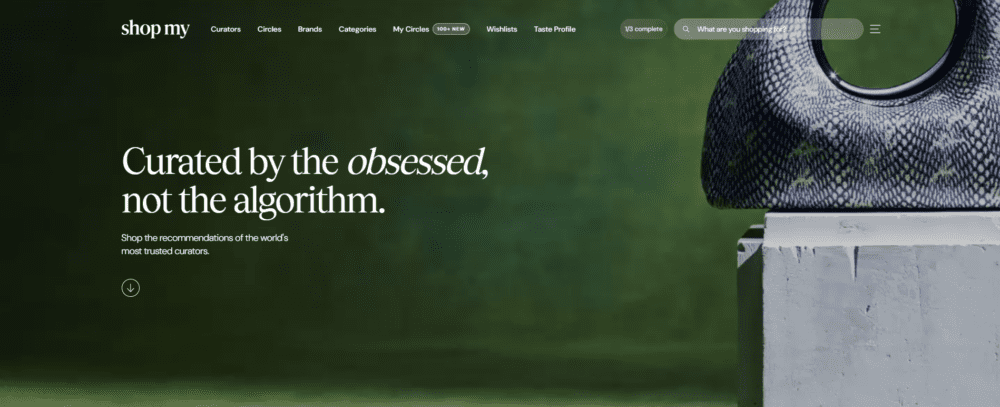
(ShopMy Homepage www.shopmy.com)
Launched in 2020, ShopMy represents a second generation of affiliate infrastructure. Rather than focusing solely on link-based tracking between two parties, it structures recommendations and recognises three core participants in the ecosystem: the creator, the customer and the brand. The platform allows recommendations to be organised, tracked and monetised in one place, enabling creators to build something closer to their own digital storefront, a “my shop” of products they genuinely use and recommend. ShopMy refers to these curated collections as “Shelves,” allowing the people whose judgement drives purchasing decisions to retain more of the value they generate.
Since its inception, the company has expanded rapidly, building a network of more than 243,000 creators and approximately 1,600 brand partners as of March 2026 (3). It is now estimated to facilitate around $1 billion in annual transactions. Investor interest has followed: in 2024 the company raised $70 million in Series C funding from firms including Avenir Growth Capital, Bain Capital Ventures and Bessemer Venture Partners, bringing its valuation to approximately $1.5 billion (3).
ShopMy secured its early position in the market by focusing on a niche creator community. The company initially worked with a small group of beauty creators, inviting them to participate in live product demonstrations over Zoom (3). The strategy centred on building strong relationships before expanding outward, gradually evolving into a platform where creators monetise authentic recommendations while brands connect with audiences already predisposed to their products (4).
Part of the platform’s momentum has come from the creators themselves. High-profile figures such as Sofia Richie Grainge and Aimee Song have not only used the platform but also invested in it, signalling a broader shift toward creators becoming stakeholders in the systems they help drive. Their involvement has also helped establish ShopMy as a platform with cultural credibility within the influencer community, attracting both emerging creators and the brands seeking to work with them.
At the same time, the platform has lowered the barrier to entry for participation. Anyone can join by making their social profile public and switching to a professional creator account linked to a Facebook page. The process requires no minimum follower count, allowing tastemakers to begin organising recommendations and earning commission with relatively little friction. The result is a system that remains accessible to new entrants while also attracting established creators seeking greater control over how their recommendations are presented and monetised.
“There’s a massive difference in the usability of the two platforms,” said one creator. “I find LTK to be the analogue version and ShopMy to be the digital version.” This combination of usability and social proof has helped ShopMy carve out a distinct niche, particularly among luxury brands in fashion and beauty, as well as adjacent categories such as wellness, home and lifestyle.
As Arielle Siboni, a ShopMy curator and long-time affiliate user, explains, “I primarily use ShopMy to link my followers to my recommendations, and only use LTK for Zara.” Lower-priced, high-frequency purchases continue to perform well within the ecosystem of LTK, while ShopMy has become a hub for many premium brands. “ShopMy is more technically advanced and easier to use,” she notes, highlighting its dashboard, access to data and direct brand relationships.
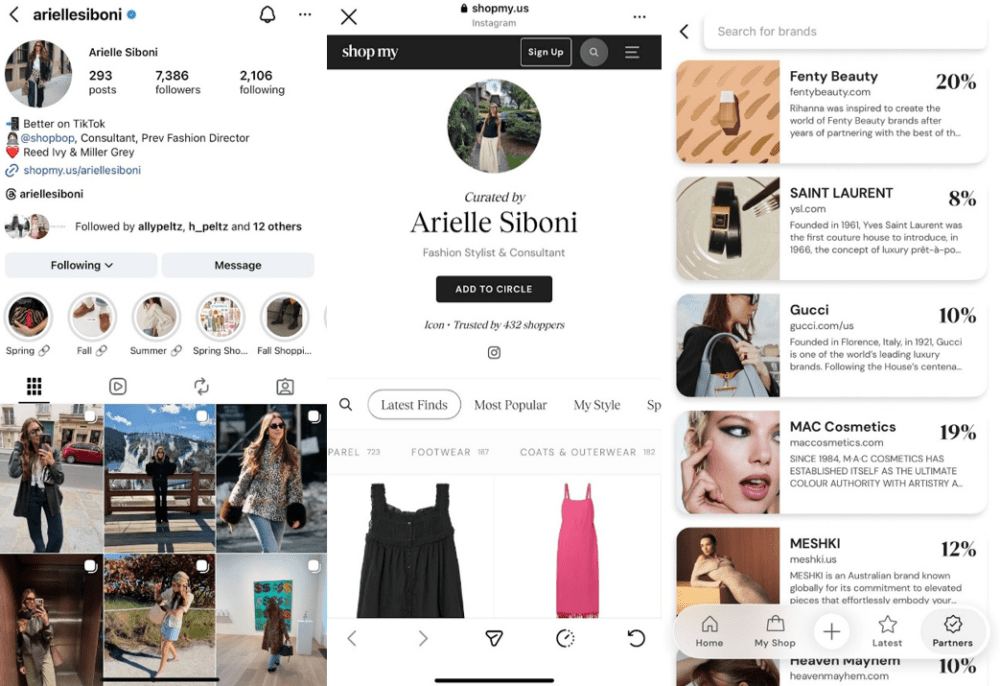 (Image Reference: Arielle Siboni Instagram page, ShopMy Bio linked page, and ShopMy Partners page)
The interface, improved data visibility and the ability to organise recommendations into a single persistent environment create a different kind of engagement, one that feels closer to building a personal retail space than simply sharing products.
The result is not the replacement of one model by another, but a rebalancing. Affiliate marketing proved that influence could be monetised; platforms like ShopMy are now addressing how that influence can be organised and scaled.
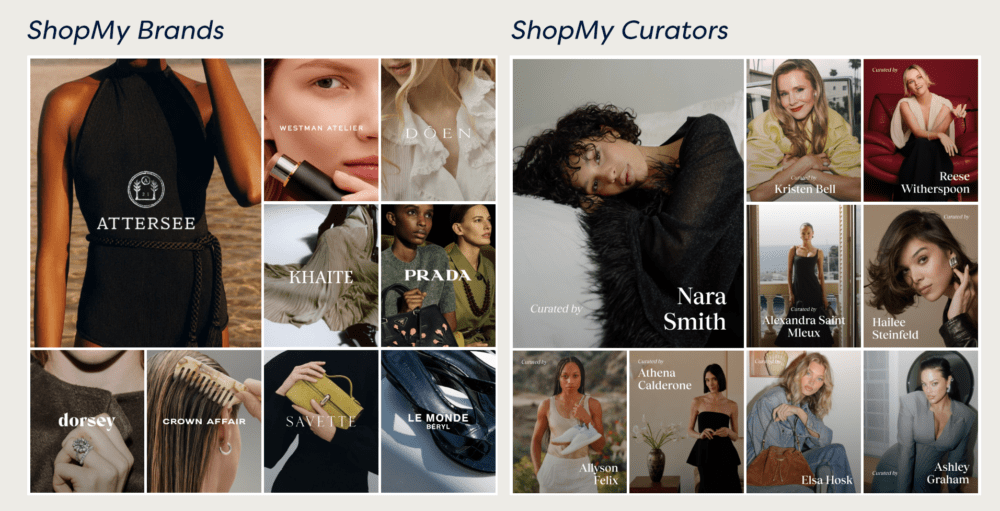 (IP Graphic / ShopMy featured Brands and Curators 2026)
ShopMy functions as a marketplace connecting creators, brands and shoppers within a single environment. Creators typically earn between 10–30% commission on purchases made through their links, while the platform retains a small percentage of each transaction (5). In practice, this transforms personal recommendations, once scattered across Instagram stories, saved posts or screenshots, into a monetisable retail layer.
For users, the experience is defined by immediacy and consolidation. A follower who admires the wardrobe of a creator such as Nara Smith or Leandra Medine Cohen can move directly from inspiration to purchase within a single environment. Rather than searching across multiple retailers, shoppers can browse outfits, beauty routines and everyday recommendations organised by the creator.
For creators, the platform sits somewhere between tool and extension of behaviour. As ShopMy curator Arielle Siboni explains, adding products often mirrors how she already shops online: “When I’m shopping and see something I like, I add it to my ShopMy. It shows your most recent uploads first, so it feels very natural.” The interface prioritises recent additions, reflecting how shoppers often begin by browsing what’s new. Curation becomes continuous rather than campaign-led, with creators gradually building collections as they discover and recommend products.
This approach also shapes how creators think about linking itself. Rather than directing followers to a single product page, many prioritise environments that encourage broader discovery. As Siboni notes, even when a product is available directly through a brand, she often links to multi-brand retailers such as Net-a-Porter, allowing followers to continue browsing and increasing the likelihood of conversion across a wider basket.
For brands, the platform functions as both a discovery engine and a partnership tool. Companies can identify tastemakers whose recommendations consistently convert, set commission rates, and track which creators are driving sales. The platform also provides software that allows brands to analyse performance and send gifted products to creators they want to work with, enabling a more targeted deployment of influencer marketing budgets (3). Importantly, it also allows brands and creators to communicate directly through the platform, making it easier to build relationships and develop collaborations that range from product gifting to longer-term paid partnerships.
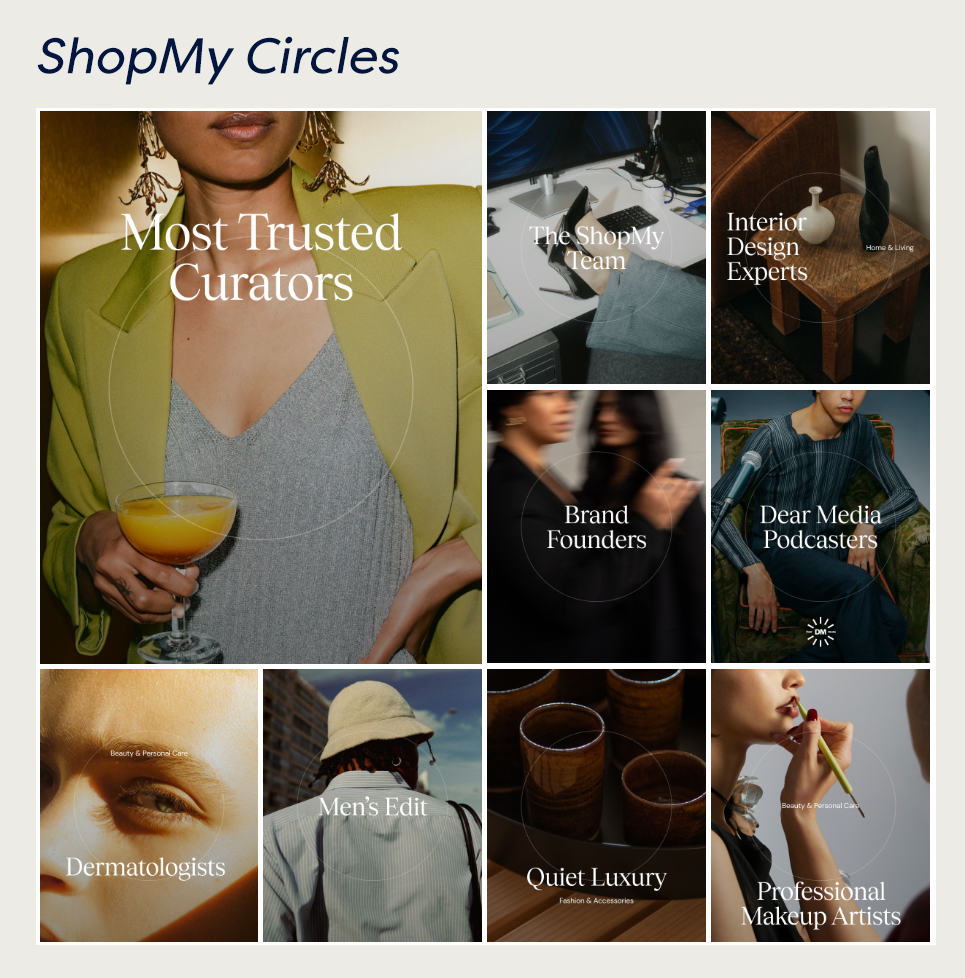 (IP Graphic / ShopMy Circles 2026)
ShopMy’s ambitions extend beyond affiliate infrastructure toward what might be described as curated commerce. The platform is increasingly designed around the end consumer, aiming to connect brands, creators and what co-founder Harry Rein describes as the “third stakeholder”: the shopper (4).
One of the clearest expressions of this shift is the introduction of “circles.” Rather than browsing the recommendations of a single creator, users can follow multiple tastemakers and combine their selections into a single personalised feed. The result is a private shopping environment shaped by individuals whose judgement users trust.
In this model, discovery is driven less by algorithmic feeds and more by intentional following. Rein has described the platform as a way for consumers to shop from a “trusted circle” of tastemakers rather than relying solely on algorithmic recommendation (3), an idea reflected in ShopMy’s slogan: “Curated by the Obsessed, Not the Algorithm.”
The commercial logic is also different. Instead of encountering products passively within social content, users enter an environment designed specifically for browsing recommendations. The value lies not in a single post, but in the accumulation of trusted suggestions over time.
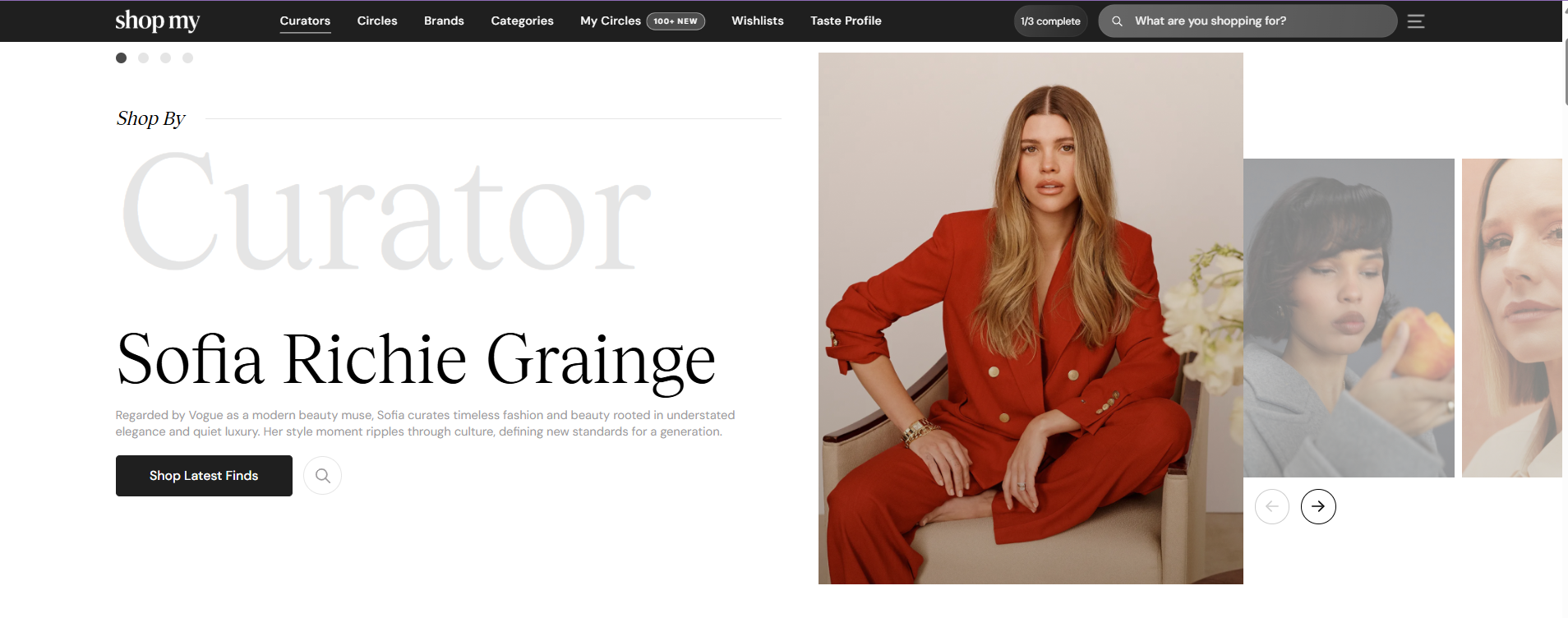
(Curator Homepage, ShopMy 2026)
Sofia Richie Grainge offers a clear example of how creator economics are evolving. Widely regarded as a style reference point among fashion audiences, her influence accelerated following her 2023 wedding, when her minimalist aesthetic triggered a surge of consumer interest across the brands and products associated with the event. The moment illustrated how a single cultural signal could translate into measurable purchasing behaviour at scale.
In 2025, Richie Grainge took that influence a step further, investing in ShopMy and joining the platform as one of its founding curators. The move marked a shift from participating in campaigns to owning part of the infrastructure shaping creator commerce (6). “I wanted to have a real say in the conversation, not just participate in it,” she told Forbes. “Investing in ShopMy felt like the natural next step because it’s about building the future of how people interact with style and commerce” (6).
For ShopMy’s founders, her involvement reinforces a broader repositioning of the creator’s role. Co-founder Chris Tinsley described Richie Grainge as representative of a new model of influence: someone who “curates like an editor, builds trust like a peer, and whose taste genuinely drives purchasing decisions” (6). Figures such as interior designer Kelly Wearstler have also built large audiences around their aesthetic point of view, translating personal taste into curated product recommendations across fashion, home and lifestyle.
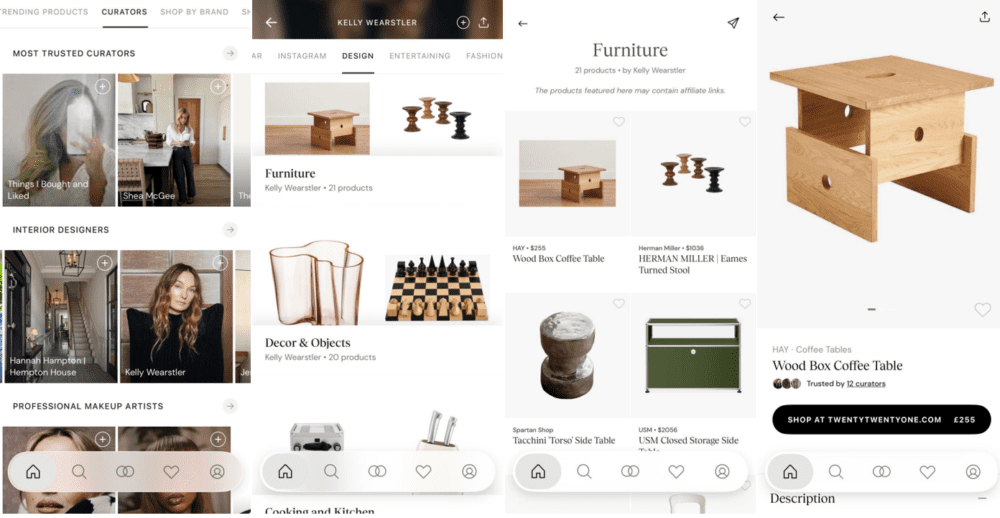
(Image Reference: ShopMy Curators page, Kelly Wearstler’s ShopMy Shelves, Furniture, and example product)
The question is not whether monetisation is inherently problematic, but where the boundary lies. When someone who has always offered thoughtful recommendations begins attaching links and earning commission, does it erode trust, or simply acknowledge that their taste has always carried commercial value? Word-of-mouth recommendations have long been powerful precisely because they appear impartial. When a friend recommends something, the assumption is that the advice is offered freely. Once commission enters the equation, that assumption inevitably begins to shift.
Platforms like ShopMy operate within this tension. They make it easier to monetise personal taste, lowering the barrier for individuals who are frequently asked for recommendations but have no desire to become full-time content creators. Goldman Sachs estimates the global creator economy will reach $500 billion by 2027, as platforms increasingly seek ways to translate cultural influence into measurable commerce (3).
For curators, maintaining trust becomes a question of editorial discipline. The value of recommendation depends on selectivity; if every product carries a link, the distinction between genuine advice and salesmanship quickly collapses. As ShopMy curator Arielle Siboni explains, many recommendations emerge organically from what creators already wear or use: “Things that I’ve worn or posted — when people see it on me, it’s easier for them to see how I styled it and how it fits.”
Sofia Richie Grainge addressed the same tension when discussing her involvement with the platform: “Trust is everything. I never share something I wouldn’t buy, wear or use myself. People can tell when it’s authentic” (6).
For brands, the logic is similar. The effectiveness of recommendation-driven commerce depends less on scale than on credibility. Over-commercialising the channel risks undermining the very trust that makes it powerful.
